
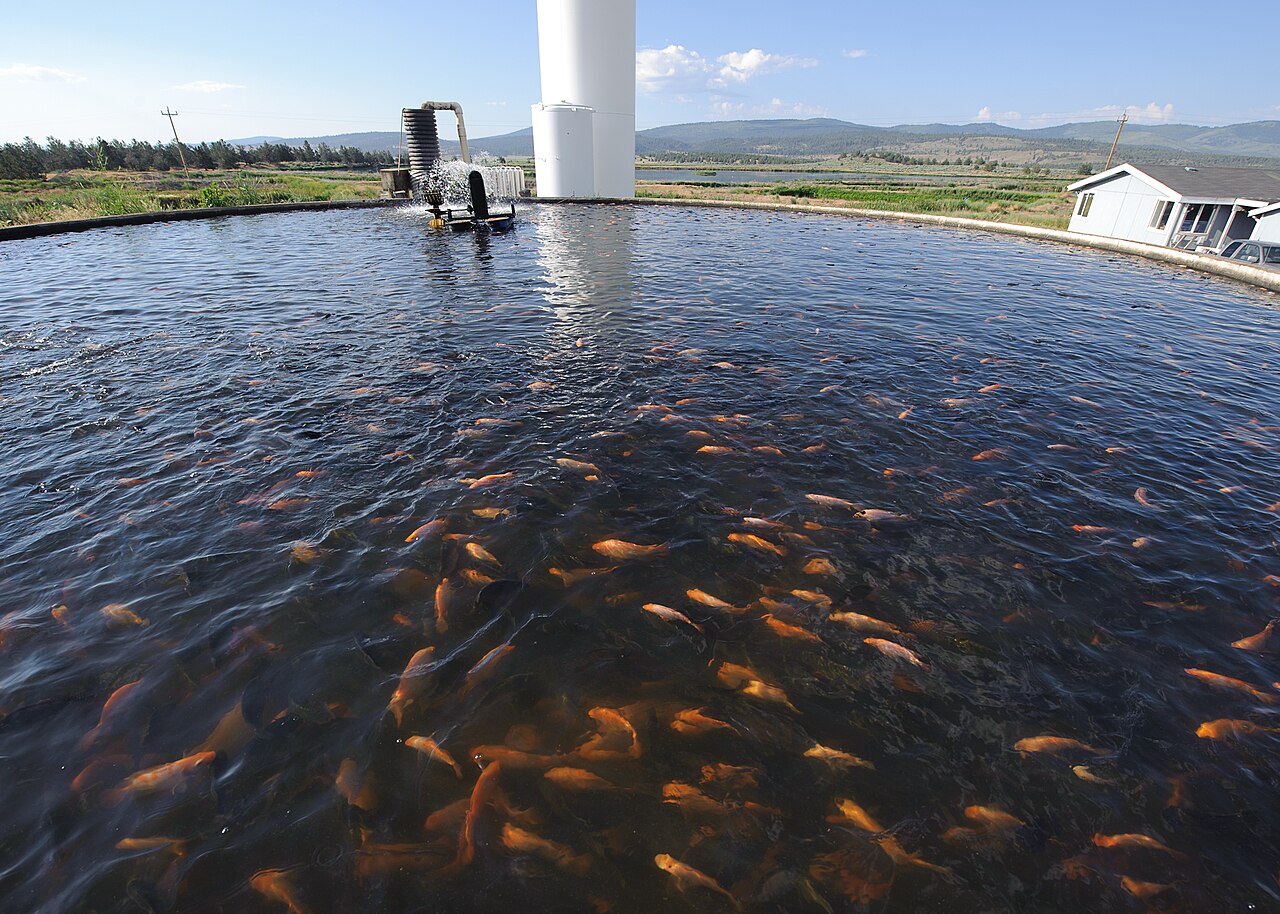
This reference uses the specific documents linked in the article and listed below. Check their scope, publication dates and the statements they support.
Animal at a glance
| Topic | Overview |
|---|---|
| Animal group | Farmed cichlid fishes; species, strains and hybrids need identification |
| Production roles | Food fish and hatchery or nursery stock |
| Life stages | Broodstock, fry, juvenile and grow-out fish |
What kind of tilapia are you raising?
Nile tilapia, Mozambique tilapia and commercial hybrids should not be treated as one interchangeable animal. A supplier's color name, such as red tilapia, may describe appearance without identifying the full breeding background. Ask which species or hybrid is supplied and whether the fish are intended for the receiving climate and system. FAO's Nile tilapia profile explains the biological differences that make stock and reproductive management important.
Tilapia can use a range of natural food resources, but a fish that survives a poor environment may grow slowly or become more vulnerable to other problems. Do not select a stocking level by asking how many fish can remain alive in a tank. Start with the amount of feed, oxygen supply and waste treatment the unit can support through the entire growing period.
Fry, nursery fish and grow-out animals need different care
The hatchery produces small fish; a nursery helps those fish become strong enough for a larger production unit. Grow-out then takes them toward a market size. These stages differ in feed particle size, protection from predators, ability to tolerate handling and the equipment needed to distribute feed and water.
Uncontrolled reproduction can crowd a pond with small fish and divert resources from the original grow-out group. Breeding management therefore belongs in the purchasing decision. Ask the hatchery how its stock is produced and how unwanted recruitment is managed. Do not improvise a hormonal treatment from an internet description. A grow-out farmer can buy appropriate seed without attempting specialist hatchery procedures.
When small fish disappear or sizes become very uneven, investigate survival, escape, breeding and access to feed before assuming the largest fish represent the whole group. A nursery may be useful because it allows closer observation and size-appropriate feeding before placement in a much larger pond or cage.
Feeding a pond differs from feeding a tank
A productive pond may supply natural food as well as purchased feed. A tank or cage generally gives the farmer less reason to assume that natural productivity will complete the ration. Use a feed formulated for the species, size and production purpose. The cheapest bag may become expensive if it breaks into dust, is poorly accepted or supplies a nutrient balance intended for another animal.
Watch how fish approach and consume feed. Feed should reach the fish rather than drift out of the enclosure or collect where only a few dominant fish can eat it. Sudden loss of appetite is a reason to investigate, not a reason to keep adding feed until the planned quantity has been delivered. Uneaten feed creates another demand on the water system as it decomposes.
Keep feed dry and protected from heat, pests and moisture. Buy quantities that can be used while the product remains within its stated storage life. A sound ration can be undermined by poor storage or by a feeder that repeatedly releases too much in one place.
Oxygen, temperature and the limits of hardiness
Ontario's tilapia production profile emphasizes oxygen and temperature as active management issues, including in recirculating systems. A warmwater species is not a species that benefits from indefinitely warmer water. Equipment, fish biomass and seasonal conditions have to be considered together.
In ponds, include the period before sunrise in the oxygen plan; a pleasant afternoon visit is not a complete test of conditions through the night. In a tank system, ask what happens when a pump stops, a screen blocks or electricity fails. Backup equipment is useful only when someone can start it promptly and it has the capacity required for the stocked unit.
Cage fish depend on the water moving through the cage. Fouling, sheltered corners and poor siting can reduce exchange even when the surrounding lake looks extensive. Increasing cage volume or the number of cages does not create additional oxygenated water.
Health, handling and early intervention
Reduce unnecessary crowding and handle fish with equipment suited to their size. Fin injury, skin damage, abnormal swimming and recurring mortality warrant investigation. These signs can arise from different combinations of environmental stress, trauma and infection; a condition photograph cannot separate them reliably.
If fish begin gathering at the surface, stop normal production tasks and activate the farm's aquatic emergency plan. Check oxygen and system operation promptly and involve an aquatic veterinarian or qualified fish-health adviser. When environmental stress and disease occur together, addressing only one can leave the underlying problem unresolved.
Common questions
Can tilapia live on pond algae alone?
That depends on the pond's food supply, fish size and the production goal. Natural food can contribute substantially in some pond systems. It should not be assumed to support any chosen density or to replace a complete feeding plan in cages and tanks.
Are all-male tilapia automatically easy to grow?
No. Breeding control addresses one production issue. The fish still need an appropriate ration, water conditions, competent daily care and a system whose oxygen and waste-treatment capacity keeps pace with growth.
Continue with practical guidance
Field guides for this animal
Browse all Tilapia field guides for husbandry advice, health explanations and practical farm routines.
Cite this reference
LivestockDefense. “Tilapia farming: feeding, breeding, water quality and healthy grow-out.” Updated 2026-11-02. https://livestockdefense.com/animals/tilapia/
Add the date you accessed the page. This identifies the current reference; keep a permitted saved copy if your work depends on its exact wording. A citation alone does not establish support for a claim.
How to cite a page and its revision ↗Sources & boundaries
Read the evidence in context.
These documents support the statements identified in this reference. Check their scope and dates when deciding whether they answer your question.
- FAO: Nile tilapia cultured species fact sheet
Source update: Not provided. Most recent check: 2026-11-02.
Bounded species biology, feeding context and production or husbandry statements attributed to this document in the animal overview sections. No numerical feeding, medication, restraint or breeding protocol reproduced.
- Ontario Ministry of Agriculture, Food and Agribusiness: Tilapia species profile for aquaculture
Source update: Not provided. Most recent check: 2026-11-02.
Species biology, life stages and the bounded practical husbandry facts cited in the aquatic animal overview or supporting guide; no drug dose, invasive procedure, universal stocking rate or complete clinical protocol.