
This reference uses the specific documents linked in the article and listed below. Check their scope, publication dates and the statements they support.
Animal at a glance
| Topic | Overview |
|---|---|
| Animal group | A mammal family including several managed deer and elk species |
| Production roles | Food and breeding systems with different species and settings |
| Life stages | Young stock, growing animals and breeding adults |
Identify the species and the production purpose
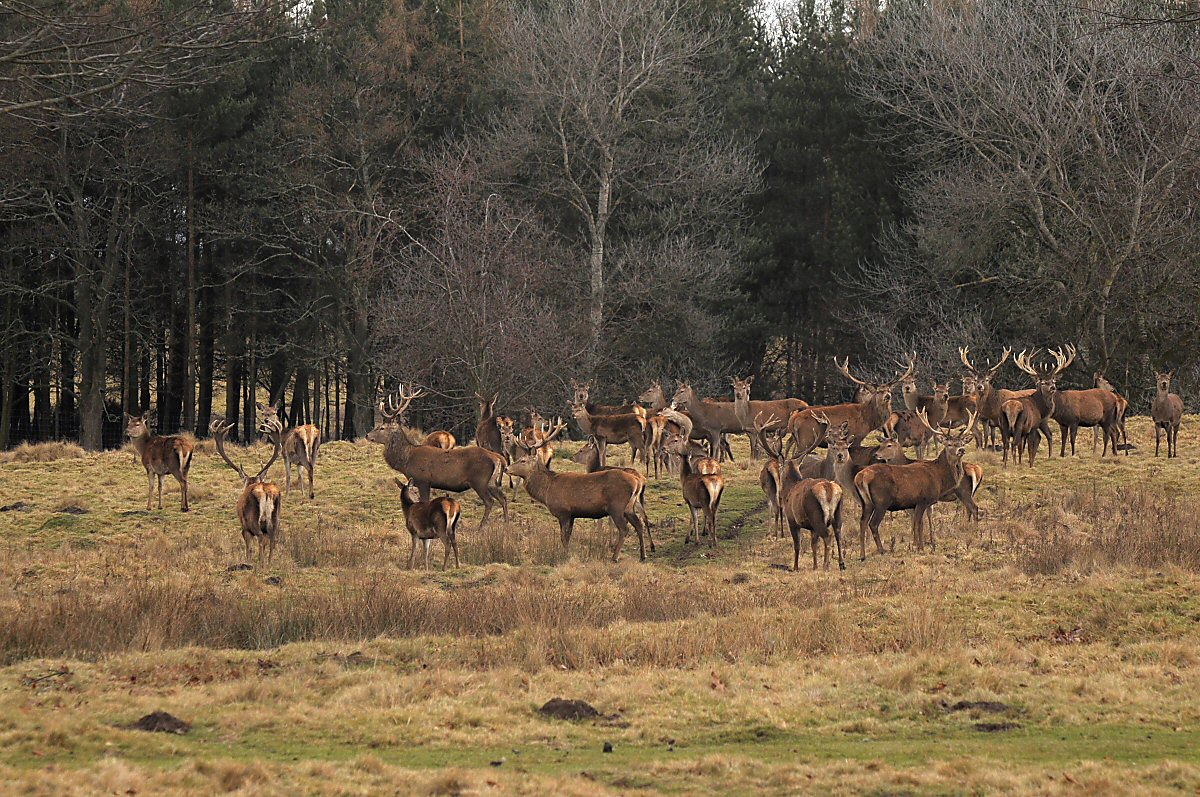
“Deer” is a family-level description, not a complete husbandry specification. Red deer, white-tailed deer, elk and reindeer differ in size, behaviour and the systems in which people manage them. A wildlife photograph may illustrate the family while saying very little about facilities suitable for a breeding or venison enterprise.
Use the farmed-deer overview, elk overview or reindeer overview for the more specific starting point. Before establishing a herd, arrange professional advice on containment, animal sourcing, handling, markets and relevant wildlife and livestock requirements. These are practical constraints, not details to settle after animals have arrived.
Feeding follows the species and the season
Forage is central to many managed-cervid diets, but the useful mix of grazing, browse and supplementary feed depends on species and site. Body condition, growth, pregnancy, milk production and the breeding season alter nutritional demand. Penn State’s White-tailed deer production and Elk production illustrate why one calendar cannot be assumed to cover every cervid.
Assess the actual forage supply and plan for seasonal shortages. Tree cover is shelter and may provide browse, but woodland area is not a reliable substitute for a feeding assessment. Ensure subordinate animals can obtain feed and water. A large communal feeder can still allow dominant individuals to exclude others.
Use supplements and minerals selected for the species and local feed situation. Avoid importing a cattle ration without review simply because cattle and deer both use forage. Sudden changes in supplementary feed are undesirable. When animals lose condition, consider access and nutritional supply alongside dental, parasitic and other disease causes.
Facilities are part of prevention
Containment must account for jumping, pressure from startled animals, calves and the surrounding wildlife. Inspect the base of fences, corners, gates and vegetation damage as well as the visible height. The applicable design and legal requirements must be checked locally; old extension examples should not be treated as current law for another jurisdiction.
Good handling facilities create a predictable route while minimizing collision, slipping and crowding. Plan gates, holding space and restraint around the actual species and trained staff. Driving frightened animals harder often worsens the event. A quiet routine and well-designed layout reduce the need for force.
Provide natural or constructed shelter and a dry resting opportunity. In calving areas, cover and the ability to avoid disturbance are useful considerations. Do not crowd all animals into the only shaded or sheltered corner without checking whether dominant adults control access.
Seasonal breeding changes behaviour
The breeding season can change the behaviour of males that were previously manageable. Antlers and body size add to the consequences of an unexpected approach. Use barriers and safe operating procedures; hand-rearing or familiarity should not be interpreted as a guarantee of safety.
Prepare calving areas and experienced assistance while avoiding unnecessary disturbance of dams and young. Assess a calf in the context of the species’ normal maternal behaviour rather than repeatedly approaching every resting youngster. A weak or injured calf still needs attention, but intervention should be informed and purposeful.
Introductions, boundaries and disease
Source animals with a clear health and movement history. Arrange separation, testing or program requirements before purchase with a cervid-experienced veterinarian and relevant animal-health authority. A healthy appearance cannot establish the absence of a chronic infection.
Prevent uncontrolled contact between managed animals and outside cervids where feasible. Fences and feeding points deserve attention because they influence both escape risk and contact. Avoid shared or borrowed equipment that has not been appropriately cleaned for its intended use.
The chronic wasting disease reference addresses a specific cervid concern. Weight loss or abnormal behaviour is not enough to diagnose it; official testing and reporting pathways depend on location. Suspected reportable disease needs professional advice before animals or carcasses are moved.
Recognizing a serious welfare or health change
Seek prompt help for breathing distress, severe injury, inability to rise, difficult birth or marked neurological change. Repeated collisions during handling are also an immediate management problem, even when no obvious wound is visible. Stop and reassess the process rather than interpreting panic as simple stubbornness.
Can a cervid enterprise use cattle facilities?
Some infrastructure may be adaptable, but containment and handling need species-specific review. A cattle yard should not be presumed suitable merely because the animals fit through its gates.
Does a quiet animal remain safe during the rut?
No behaviour history eliminates risk. Seasonal changes, reproductive status and context can alter responses, so practical protection must rely on facilities and trained handling.
Cite this reference
LivestockDefense. “Deer and elk: managed herds, feeding and health references.” Updated 2026-11-02. https://livestockdefense.com/animals/cervids/
Add the date you accessed the page. This identifies the current reference; keep a permitted saved copy if your work depends on its exact wording. A citation alone does not establish support for a claim.
How to cite a page and its revision ↗Sources & boundaries
Read the evidence in context.
These documents support the statements identified in this reference. Check their scope and dates when deciding whether they answer your question.
- Merck Veterinary Manual: Nutrition in ungulates and subungulates
Source update: Not provided. Most recent check: 2026-11-02.
Bounded species biology, feeding context and production or husbandry statements attributed to this document in the animal overview sections. No numerical feeding, medication, restraint or breeding protocol reproduced.
- Penn State Extension: White-tailed deer production
Source update: Not provided. Most recent check: 2026-11-02.
Forage, life stages, handling and fencing; old jurisdictional rules excluded.
- Penn State Extension: Red deer production
Source update: Not provided. Most recent check: 2026-11-02.
Shelter, calving cover, forage and specialized facilities; old market/legal data excluded.
- Penn State Extension: Elk production
Source update: Not provided. Most recent check: 2026-11-02.
Forage, water and nutritional changes in lactation and rut; old market/legal data excluded.