
This reference uses the specific documents linked in the article and listed below. Check their scope, publication dates and the statements they support.
Animal at a glance
| Topic | Overview |
|---|---|
| Animal group | Distinct crustacean species, including farmed Scylla mud crabs |
| Production roles | Food animals through nursery, grow-out, fattening or holding |
| Life stages | Early stock, growing crab, moulting stage and sale animal |
Identify the crab and the enterprise
Mud crabs in the genus Scylla include several cultured species. They should not be treated as identical to every crab sold for food. FAO's mud crab aquaculture manual covers the biological and production distinctions behind hatchery, nursery, grow-out and fattening operations.
Fattening improves the market condition of crabs already supplied to the unit. Grow-out raises smaller animals toward a larger size. A complete hatchery-to-harvest operation also has to manage broodstock and larvae. These are different enterprises even when each is described casually as crab farming.
Choose the production stage before buying equipment or stock. Individual holding cells may solve a particular management problem, but their presence does not make a facility capable of larval production. A nursery capable of raising crablets does not automatically have the space or water capacity for the same animals at harvest size.
Larvae and crablets need different environments
Mud crabs pass through swimming larval stages before becoming small crabs. The hatchery phase involves appropriate larval food and controlled water management. It is distinct from keeping a larger crab in a pond or holding box.
A nursery provides the transition for small crablets. Food size, shelter and the size range of the group matter. When development or growth becomes uneven, larger animals may present a risk to smaller ones. Stocking more individuals to compensate for expected losses can worsen the conditions that cause them.
Buy seed suited to the receiving nursery and obtain supplier guidance on arrival and acclimation. A carefully prepared receiving system is more valuable than a hurried effort to improvise one after transport has begun.
Moulting changes vulnerability
Crabs grow by shedding the old external covering. Newly moulted animals are soft and vulnerable, which helps explain why shelter, compatibility and physical disturbance are important in culture. A hard-shelled animal and one that has just moulted may not cope equally with the same encounter.
Cannibalism can be a major production problem. Suitable habitat, size management and, in some operations, individual holding are used to reduce harmful interactions. None should be treated as a substitute for adequate food, water and maintenance.
Individual cells bring responsibilities of their own. Every animal must be able to receive feed and suitable water, and dead or unwell animals must be noticed promptly. A large number of separate boxes can conceal a welfare problem if the design makes inspection difficult.
Food quality and access
Crabs need a suitable ration for the species, stage and intended product. Natural predatory or scavenging behavior does not mean that spoiled material or an unbalanced waste diet is appropriate. Food hygiene, storage and the effect of leftovers on the water deserve explicit attention.
Distribute feed where animals can reach it. In a group system, dominant individuals can interfere with access; in cells, an overlooked compartment can leave an animal unfed while the total feed purchase appears adequate. Good husbandry looks at the individual or usable habitat as well as the unit average.
Remove uneaten or deteriorating material using the facility's appropriate maintenance programme. Persistent waste can make the habitat less suitable and complicate health assessment. Increasing feed without checking consumption does not correct a poor feeding response.
Water and secure enclosures
Select a site and system appropriate to the crab species and stage. Water supply, drainage, salinity regime and protection from contamination should be evaluated before stocking. A holding system needs dependable exchange or treatment even when the intended residence is short.
Enclosures must also retain the animals and allow safe maintenance. Crabs can exploit gaps or climb suitable surfaces. An escape-proof design should not create sharp or abrasive contact points that repeatedly damage the stock.
Shelter and layout should support the production method without making dead animals or waste impossible to find. More structural complexity is not always a benefit if it prevents appropriate flow or practical care.
Handling, injuries and health
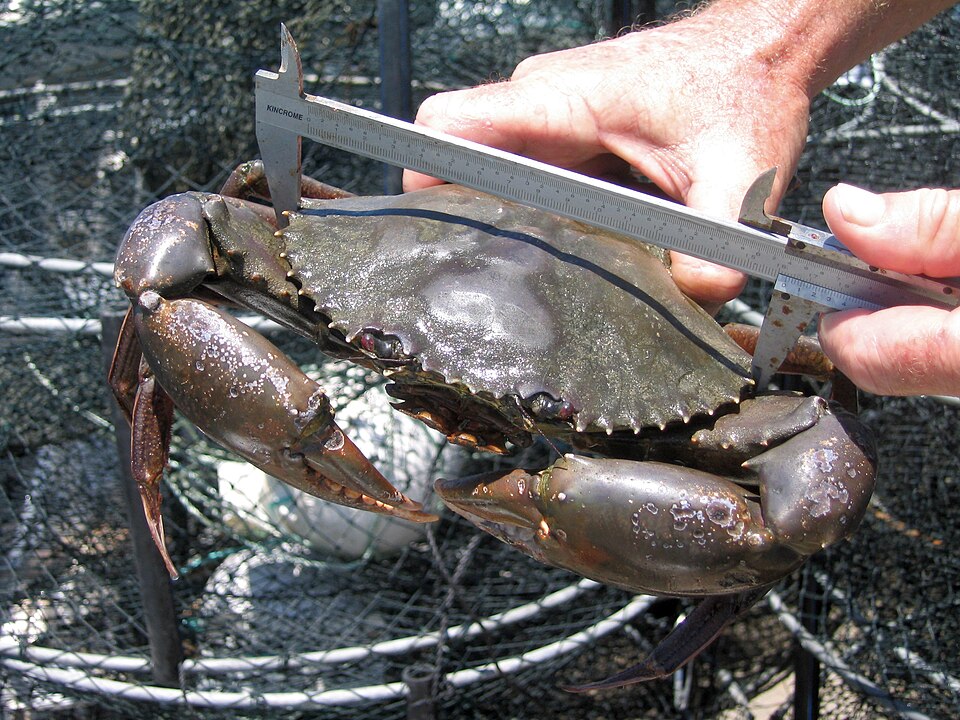
Claws can injure workers and other crabs, so handling should be performed by trained staff using suitable methods. Do not restrain, stack or transport animals by copying an image of market crabs without understanding how the technique affects their welfare.
Limb damage, unusual inactivity, poor feeding or rising mortality require investigation. Water conditions, injury, interactions and disease may contribute together. Use an aquatic-health professional rather than selecting a chemical treatment from outward appearance alone.
Is crab fattening the same as breeding crabs?
No. Fattening starts with animals already supplied to the unit. Breeding and larval production add different biological stages, feeding requirements and technical responsibilities.
Can a crab that has lost a limb simply be ignored?
No. Injury is a reason to assess the animal and the conditions that produced the damage. Even where a species can regenerate through later moults, injury should not be accepted as a normal cost of unsuitable housing or handling.
Continue with practical guidance
Cite this reference
LivestockDefense. “Mud crab farming: hatchery seed, moulting, shelter and feeding.” Updated 2026-11-02. https://livestockdefense.com/animals/crabs/
Add the date you accessed the page. This identifies the current reference; keep a permitted saved copy if your work depends on its exact wording. A citation alone does not establish support for a claim.
How to cite a page and its revision ↗Sources & boundaries
Read the evidence in context.
These documents support the statements identified in this reference. Check their scope and dates when deciding whether they answer your question.
- FAO: Mud crab aquaculture: a practical manual
Source update: Not provided. Most recent check: 2026-11-02.
Bounded species biology, feeding context and production or husbandry statements attributed to this document in the animal overview sections. No numerical feeding, medication, restraint or breeding protocol reproduced.