
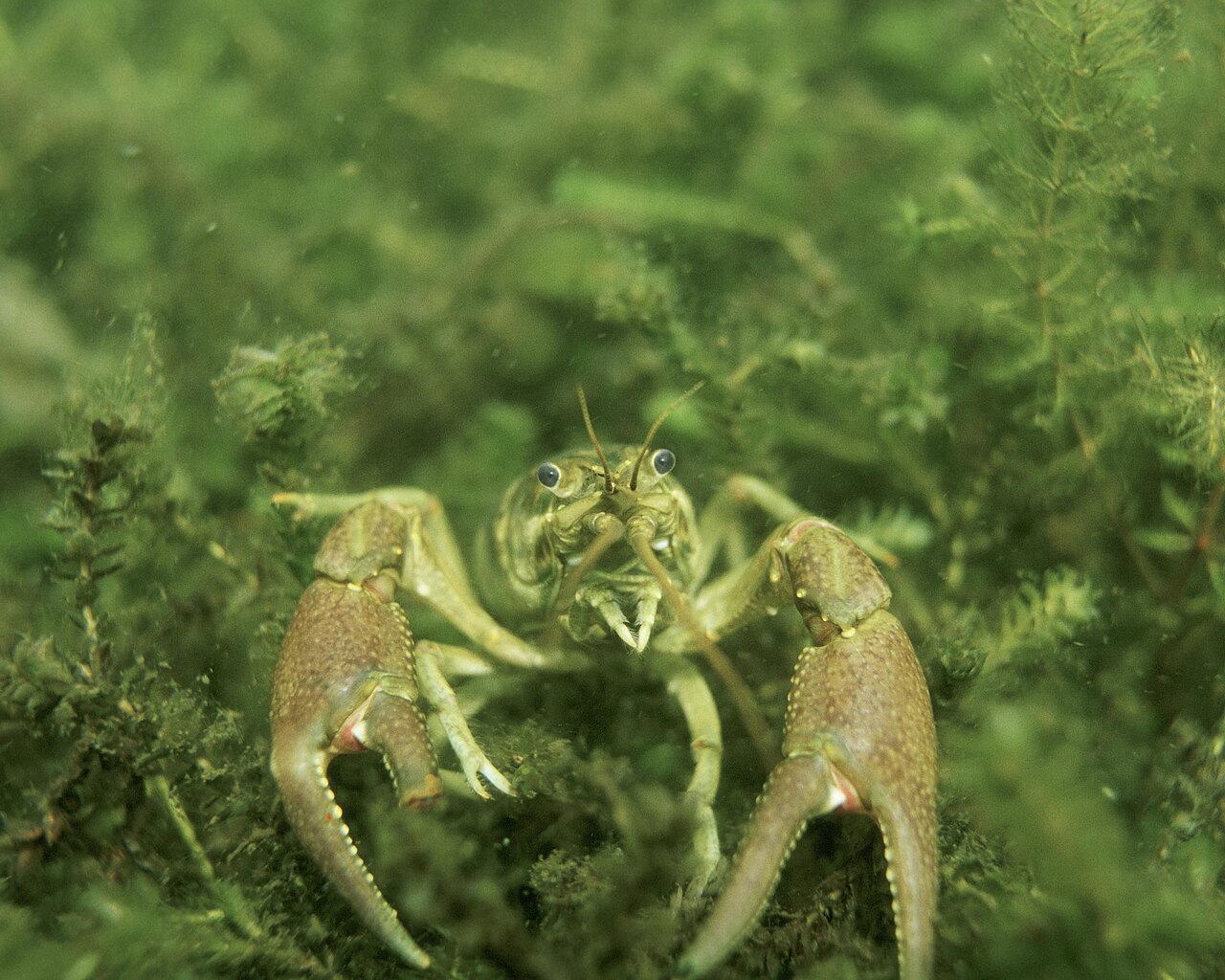
This reference uses the specific documents linked in the article and listed below. Check their scope, publication dates and the statements they support.
Animal at a glance
| Topic | Overview |
|---|---|
| Animal group | Freshwater crustaceans also called crawfish in some markets |
| Production roles | Farmed food animals and production stock |
| Life stages | Young stock, growing or moulting animals and harvested product |
Crayfish are not one universal crop
Red swamp crawfish, white river crawfish, redclaw and other cultured crayfish differ in their biology and production settings. Identify the species before copying a feeding or seasonal schedule. LSU AgCenter's Louisiana crawfish production manual is a regional production reference, not a prescription for every crayfish farm worldwide.
The name crawfish is widely used for crayfish in Louisiana. It does not turn the animal into a marine shrimp. Burrowing, habitat use and the local production season can shape the operation in ways that differ greatly from a shrimp pond or a recirculating fish tank.
Seasonal ponds are managed food webs
In Louisiana-style culture, forage and the organisms associated with its decomposition supply much of the crop's nutrition. Establishing and managing that food resource is therefore part of animal husbandry. A flooded field is not automatically a productive crayfish pond simply because water is present.
The forage, flooding schedule and water conditions interact. Decomposing organic material supports a food web but also contributes to oxygen demand. This creates a management balance: more plant material is not necessarily better if the resulting environment becomes unsuitable for the animals.
A regional extension specialist can help match the forage and seasonal plan to local soils, water and climate. The underlying lesson is to manage the habitat that feeds the animals rather than attempt to solve every production issue by buying another feed bag.
Food and the limits of supplementary feeding
A system supported by natural pond foods differs from one designed around a complete manufactured diet. Do not transfer a ration from an intensive shrimp operation to a seasonal crawfish pond without evaluating its role. The extra input may add cost and organic load without addressing the limiting food resource.
When animals remain small, examine the available food web, population pressure, season and water conditions. Increasing feed can be an attractive simple response, but it does not distinguish a food shortage from another constraint on growth.
Where a different crayfish species or more intensive system does use prepared feed, use appropriate guidance for that species and design. Feed distribution should fit bottom-associated animals and avoid persistent waste accumulation in inaccessible parts of the unit.
Burrows, young animals and habitat
Some commercially important crayfish use burrows during parts of their life cycle. Their ability to persist through a dry phase is related to biology and site conditions, not evidence that the farm can ignore water availability. Soil, bank condition and the seasonal management plan affect the habitat available to them.
Young crayfish and newly moulted animals are not equivalent to large hard-shelled stock. Shelter, food availability and predation pressure can influence which animals survive to enter the market crop. A pond that produces a few large adults may still have a problem supporting the broader juvenile population.
Avoid introducing unassessed wild animals or moving unwanted stock into natural waters. Species suitability and escape prevention should be part of a lawful aquaculture plan. A hardy introduced animal can create problems beyond the farm boundary.
Oxygen should be measured, not guessed
The Louisiana manual treats oxygen management as a core production issue. Water that smells or looks unusual may signal a concern, but appearance is not an oxygen measurement. Particular attention is needed when warm conditions and decomposition increase the system's demand.
The useful response is to assess the actual pond and use its planned water-management or aeration arrangements. Pumping without knowing the condition of source and receiving water can waste resources or fail to address the problem. Technical advice should fit the actual pond rather than a generalized daily water-change rule.
Trap catches are affected by behavior
LSU's crawfish harvesting guidance explains why catch depends on more than the number alive in the pond. Temperature, bait, trap placement and animal activity influence what enters a trap. A lower daily catch is therefore a prompt to investigate the season and method, not proof that most animals died overnight.
Harvest planning should also protect the living product. Handle stock gently and use appropriate clean, ventilated and temperature-managed arrangements for the product and journey. The conditions under which an animal survives transport do not establish that it is in good market condition.
Common questions
Should every crayfish pond be fed pellets?
No. The appropriate feeding strategy depends on the species and system. Established forage-based crawfish production and an intensive fed system use different nutritional approaches.
Does a poor trap catch diagnose a disease outbreak?
No. Catch is affected by several biological and operational factors. Unexplained mortality, poor condition or other health signs require a separate aquatic-health investigation.
Continue with practical guidance
Cite this reference
LivestockDefense. “Crayfish farming: seasonal ponds, natural food, oxygen and harvest care.” Updated 2026-11-02. https://livestockdefense.com/animals/crayfish/
Add the date you accessed the page. This identifies the current reference; keep a permitted saved copy if your work depends on its exact wording. A citation alone does not establish support for a claim.
How to cite a page and its revision ↗Sources & boundaries
Read the evidence in context.
These documents support the statements identified in this reference. Check their scope and dates when deciding whether they answer your question.
- LSU AgCenter / Southern Regional Aquaculture Center: Crawfish harvesting: factors affecting catch
Source update: Not provided. Most recent check: 2026-11-02.
Bounded species biology, feeding context and production or husbandry statements attributed to this document in the animal overview sections. No numerical feeding, medication, restraint or breeding protocol reproduced.
- LSU AgCenter: Louisiana crawfish production manual
Source update: Not provided. Most recent check: 2026-11-02.
Species biology, life stages and the bounded practical husbandry facts cited in the aquatic animal overview or supporting guide; no drug dose, invasive procedure, universal stocking rate or complete clinical protocol.