
This reference uses the specific documents linked in the article and listed below. Check their scope, publication dates and the statements they support.
Animal at a glance
| Topic | Overview |
|---|---|
| Animal group | Crustaceans farmed as identified shrimp species |
| Production roles | Food shrimp, hatchery and nursery stock |
| Life stages | Broodstock, larval stages, post-larvae, nursery and grow-out |
Know the shrimp and the production system
Whiteleg shrimp are commonly called Penaeus vannamei. Some sources use Litopenaeus vannamei. The needs of whiteleg shrimp can differ from those of other species, such as tiger shrimp. FAO's whiteleg shrimp profile describes the species' marine and coastal life history and its cultured production stages.
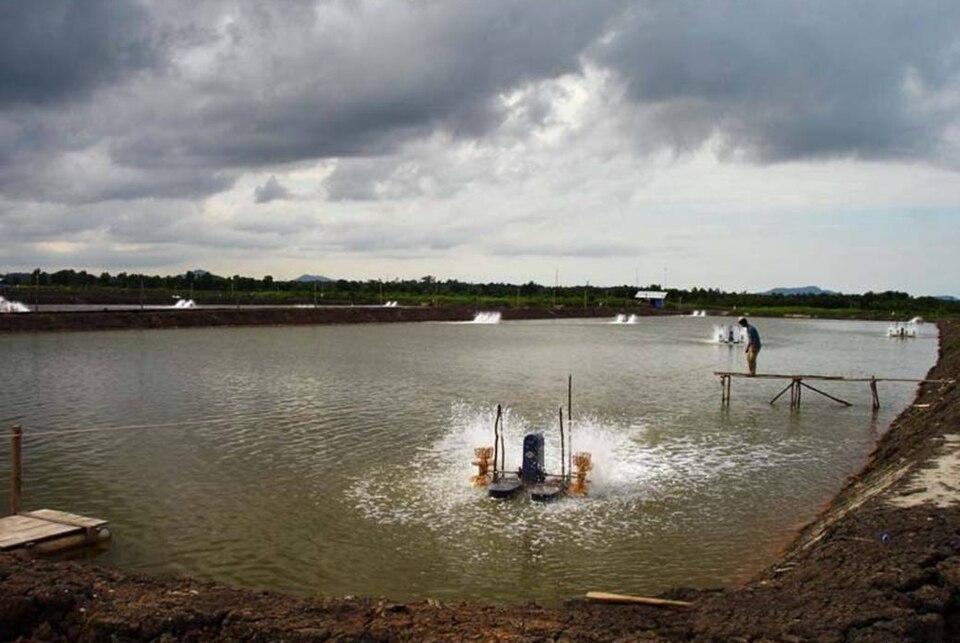
Ponds and intensive tanks handle feed, solid waste and water quality in different ways. A biofloc tank is one type of intensive system. For any system, ask how it supplies oxygen, where waste collects and what happens if the main equipment stops.
Hatchery postlarvae are the beginning of grow-out
Shrimp hatcheries raise larvae into postlarvae, which can move to the next stage of production. Hatcheries need different food and water conditions from a grow-out farm. Before buying postlarvae, confirm what stock you are buying, what its health records cover and what conditions it will need on arrival.
Specific-pathogen-free status covers particular pathogens under defined testing or production conditions. Shrimp can still be exposed after arrival. Plan for suitable water conditions and steps to prevent contamination in the receiving system.
Plan receiving and acclimation with a competent hatchery or technical adviser. A routine copied from a different salinity, temperature or stock size may be inappropriate. The objective is a prepared transition rather than a race to empty the transport containers.
Feeding animals that use the bottom
Choose feed made for the shrimp’s species and size. It should hold together in water long enough for the animals to find and eat it. Feed that breaks apart quickly can make water quality worse.
Appetite and consumption should guide adjustments within the production plan. Uneaten material is a reason to investigate the ration, distribution and animal condition. Adding more because the calculated amount has not disappeared can worsen the underlying problem.
Plan feed alongside the oxygen supply and the system’s capacity to handle waste. Growing shrimp, microbes and built-up organic material add to demand. As the shrimp grow, the farm can reach its limit even with the same number of animals.
Keep feed protected from moisture and pests and use it within the manufacturer's storage guidance. Poor storage cannot be corrected by a carefully calculated feeding rate. Where the product looks or smells abnormal, seek supplier advice rather than offering it to valuable stock as a trial.
The pond bottom is part of the living environment
Shrimp spend much of their time near the bottom and other surfaces. Check those areas as well as the water near the surface. Design the pond or tank so staff can manage solid waste and service equipment safely.
Aeration must suit the unit and the largest demand anticipated. Installed equipment should be maintained and accompanied by a workable backup response. A single operating aerator is not proof that every part of a pond has suitable conditions.
The Merck environmental-disease review identifies oxygen shortage and toxic water conditions among major aquatic-health concerns. For shrimp farms, that supports an integrated investigation of animals and their environment rather than treating a mortality event as a feed or pathogen problem by default.
Moulting, handling and shelter from avoidable stress
Shrimp grow by shedding their external covering and forming a new one. Their condition and behavior can vary around this process. A production programme should avoid unnecessary handling and recognize that vulnerability is not uniform throughout the cycle.
Size assessment, netting and transfers should have a clear purpose and use suitable equipment. Reduce injury, prolonged crowding and abrupt environmental change. A useful observation programme watches the animals where they live rather than repeatedly disturbing them to obtain a measurement.
Biosecurity and disease response
Healthy seed, water-source management, equipment hygiene and control of incoming animals belong in the farm's prevention plan. Each route of entry should be considered in the actual site layout. Buying a product labeled biosecure does not make shared gear or contaminated intake water irrelevant.
Sudden feed refusal, abnormal swimming, marked color changes or increasing mortality warrant prompt aquatic-health advice. Named conditions such as white spot disease and hepatopancreatic disease need appropriate diagnostic interpretation. Do not apply medicines or pond chemicals simply because a photograph looks familiar.
Does specific-pathogen-free stock guarantee a disease-free crop?
No. It refers to a defined status for specified pathogens and conditions. Subsequent exposure, other pathogens and environmental problems remain possible.
Can a shrimp pond be managed only from surface-water appearance?
Check the shrimp and the pond bottom as well as the water. Surface color and clarity provide limited information about oxygen elsewhere in the pond. Ask for an assessment that fits the production system.
Continue with practical guidance
Field guides for this animal
Browse all Farmed shrimp field guides for husbandry advice, health explanations and practical farm routines.
Cite this reference
LivestockDefense. “Shrimp farming: hatchery seed, feeding, pond bottoms and biosecurity.” Updated 2026-11-02. https://livestockdefense.com/animals/shrimp/
Add the date you accessed the page. This identifies the current reference; keep a permitted saved copy if your work depends on its exact wording. A citation alone does not establish support for a claim.
How to cite a page and its revision ↗Sources & boundaries
Read the evidence in context.
These documents support the statements identified in this reference. Check their scope and dates when deciding whether they answer your question.
- Merck Veterinary Manual: Environmental Diseases of Aquatic Animals in Aquatic Systems
Source update: 2026-06. Most recent check: 2026-10-30.
Document scope and recorded checks
Surface piping is compatible with low oxygen, and water-quality interpretation depends on species and system; no universal threshold, chemical correction or environmental manipulation recipe supplied. pH, carbonate conditions and other water variables need species- and system-specific interpretation; no chemical adjustment, sampling recipe or universal safe range supplied. Pond dissolved oxygen can vary across the day; water interpretation remains species- and system-dependent. No measurement protocol, threshold or corrective manipulation recipe supplied. Water-quality assessment matters and interpretation varies with species and system. No universal larval thresholds or corrective chemical procedures supplied. Nitrogenous compounds, pH and temperature need species/system context; rising pH can increase ammonia toxicity. No universal safe ranges, chemical correction, calculation recipe or test procedure supplied. Pond dissolved oxygen can vary over a day; water measurements require species/system and actual location/time context. No universal threshold, sampling schedule or water-correction procedure supplied.
Entries retain the date and scope of each recorded inspection.
- 2026-10-30 — Nitrogenous compounds, pH and temperature need species/system context; rising pH can increase ammonia toxicity. No universal safe ranges, chemical correction, calculation recipe or test procedure supplied.
Exact publisher page or indexed publisher text inspected for the bounded facts identified; no independent veterinary review implied
- 2026-10-30 — Pond dissolved oxygen can vary over a day; water measurements require species/system and actual location/time context. No universal threshold, sampling schedule or water-correction procedure supplied.
Exact publisher page or indexed publisher text inspected for the bounded facts identified; no independent veterinary review implied
- 2026-10-29 — Surface piping is compatible with low oxygen, and water-quality interpretation depends on species and system; no universal threshold, chemical correction or environmental manipulation recipe supplied.
Exact publisher page or indexed publisher text inspected for the bounded facts identified; no independent veterinary review implied
- 2026-10-29 — pH, carbonate conditions and other water variables need species- and system-specific interpretation; no chemical adjustment, sampling recipe or universal safe range supplied.
Exact publisher page or indexed publisher text inspected for the bounded facts identified; no independent veterinary review implied
- 2026-10-29 — Pond dissolved oxygen can vary across the day; water interpretation remains species- and system-dependent. No measurement protocol, threshold or corrective manipulation recipe supplied.
Exact publisher page or indexed publisher text inspected for the bounded facts identified; no independent veterinary review implied
- 2026-10-29 — Water-quality assessment matters and interpretation varies with species and system. No universal larval thresholds or corrective chemical procedures supplied.
Exact publisher page or indexed publisher text inspected for the bounded facts identified; no independent veterinary review implied
- 2026-10-30 — Nitrogenous compounds, pH and temperature need species/system context; rising pH can increase ammonia toxicity. No universal safe ranges, chemical correction, calculation recipe or test procedure supplied.
- FAO: Whiteleg shrimp cultured species fact sheet
Source update: Not provided. Most recent check: 2026-11-02.
Bounded species biology, feeding context and production or husbandry statements attributed to this document in the animal overview sections. No numerical feeding, medication, restraint or breeding protocol reproduced.