
This reference uses the specific documents linked in the article and listed below. Check their scope, publication dates and the statements they support.
Animal at a glance
| Topic | Overview |
|---|---|
| Animal group | Salmonid fishes, including rainbow trout |
| Production roles | Food fish and hatchery or nursery stock |
| Life stages | Egg, fry, fingerling and grow-out fish |
Rainbow trout and the meaning of cool water
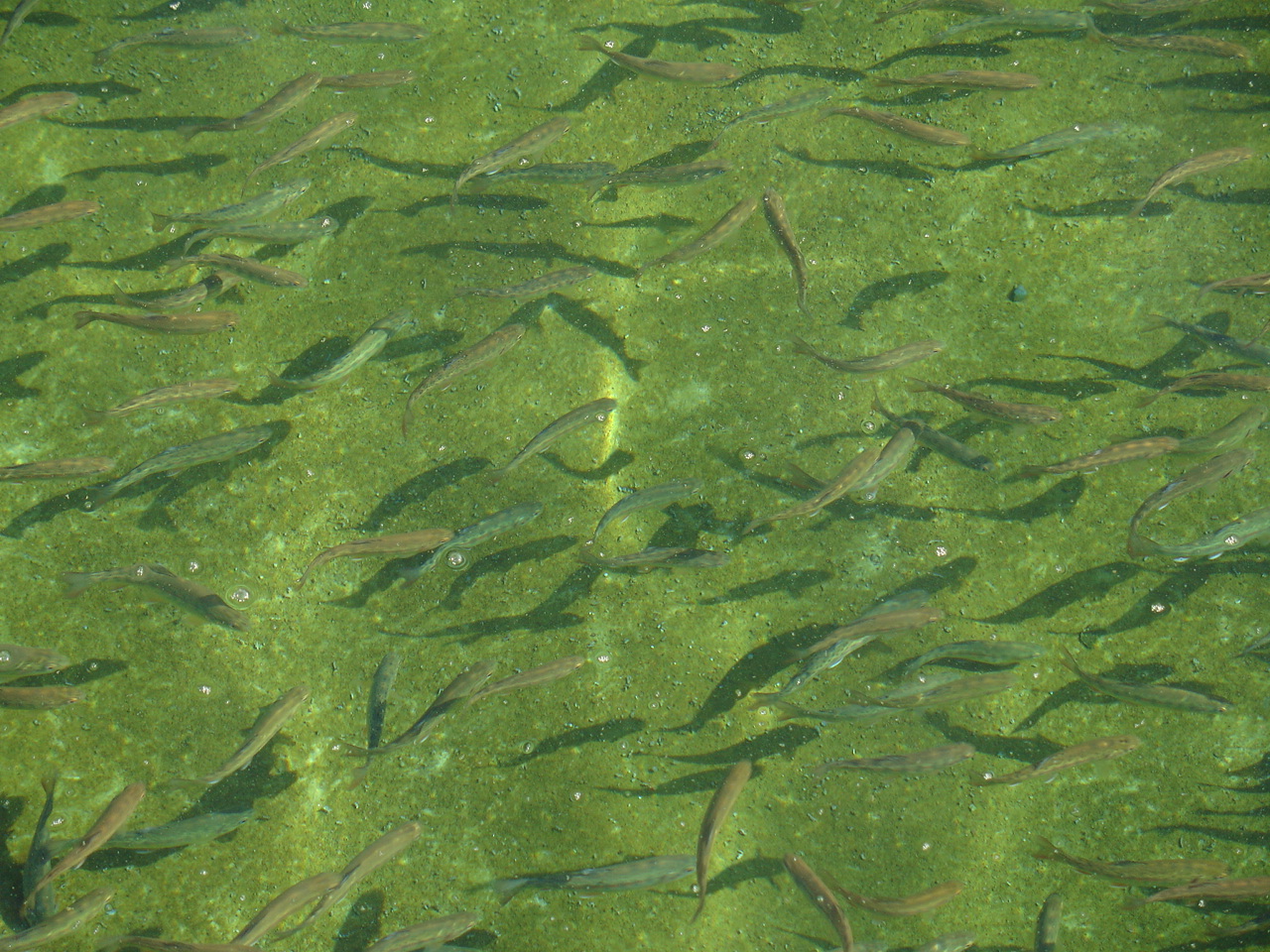
Rainbow trout, Oncorhynchus mykiss, are a particular salmonid species, not a synonym for all trout. FAO's rainbow trout culture profile describes freshwater production, different life histories and the progression from hatchery stages to grow-out. A coldwater label does not provide a complete temperature prescription for every strain or life stage.
The production question is whether the water remains suitable throughout the season, including periods of low flow and warm weather. A site that looks ideal during spring may have a different carrying capacity later. Design decisions should therefore be based on the limiting conditions, not the most favorable visit.
Water has to reach the fish
Raceways, tanks and cages manage water differently. A raceway can move water continuously, but that flow only helps if its quantity and quality remain suitable for the biomass being held. Downstream fish may experience water after upstream animals have already used oxygen and released wastes.
Examine intake protection, screens, distribution and drainage as part of animal care. A blocked outlet or a poorly distributed inlet can create a local problem before the entire facility appears abnormal. Maintenance matters because the fish cannot leave an unsuitable section of a confined production unit.
The Merck review of aquatic environmental disease identifies oxygen shortage and ammonia among important environmental hazards. These are reasons to test and investigate the actual water rather than attributing every loss to infection. Fish health and engineering have to be considered together.
Eggs and first-feeding fry
The hatchery stage relies on appropriate incubation water and protection from unnecessary disturbance. After hatching, young trout first use their yolk reserves and later begin taking external food. The timing and delivery of that first feed require attention; adult-feeding habits cannot be used as a model for newly feeding fry.
Small trout need particles they can capture and swallow. Distributing feed unevenly can leave some fish behind even when the total ration appears adequate. Observe the smallest fish as well as the largest, and seek technical advice if a nursery group becomes markedly uneven or feeding is inconsistent.
Hatchery production is a skilled operation. A grow-out business may choose to buy appropriate juveniles rather than manage broodstock, incubation and first feeding itself. That choice should be made around expertise, biosecurity and dependable supply, not simply the apparent availability of empty tanks.
Grow-out feeding and appetite
Choose a feed formulated for trout and the actual size class. Feed quality includes nutrient balance, particle size, stability and storage condition. A stale or moisture-damaged ration can undermine an otherwise competent feeding programme.
Watch the response rather than relying only on a preset feeder setting. If feeding slows sharply, check water conditions and fish behavior. Increasing the offered amount can leave more uneaten material in the system while the reason for the appetite loss remains unresolved.
Rations and stocking should fit the water's capacity. Growing fish consume more resources as their total biomass rises. A tank that was comfortably stocked with small juveniles may become much more demanding without any new fish being added.
Handling, grading and welfare
Grading can be useful when sizes diverge, but it should have a clear purpose and be carried out with appropriate equipment. Avoid unnecessary netting and prolonged crowding. Protect skin and gills from abrasion, pressure and poor water exchange during the operation.
Plan the whole movement before it begins: receiving space, water supply, staff roles and what to do if the process must stop. A rushed transfer that leaves fish waiting in a confined volume can erase the benefit of a carefully managed grow-out period.
Unusual swimming, repeated rubbing, visible wounds, loss of appetite or increasing deaths require investigation. An aquatic veterinarian can help distinguish environmental injury, parasites and infection. Diagnostic sampling or treatment choices should be guided by that assessment rather than by a resemblance to a photograph.
Questions about trout care
Can trout be kept wherever water feels cold to a person?
No. Human touch is not a reliable measure of temperature, oxygen or water chemistry. A suitable site needs an objective assessment of its water supply and how conditions vary when the fish are present.
Does adding more flow always solve a health problem?
Not necessarily. More water can help only if it is suitable and reaches the fish effectively. Source-water contaminants, unsuitable temperature or an infectious problem can require a different response. Investigate the cause before treating flow as a universal cure.
Continue with practical guidance
Field guides for this animal
Browse all Farmed trout field guides for husbandry advice, health explanations and practical farm routines.
Cite this reference
LivestockDefense. “Trout farming: cool water, oxygen, feeding and careful handling.” Updated 2026-11-02. https://livestockdefense.com/animals/trout/
Add the date you accessed the page. This identifies the current reference; keep a permitted saved copy if your work depends on its exact wording. A citation alone does not establish support for a claim.
How to cite a page and its revision ↗Sources & boundaries
Read the evidence in context.
These documents support the statements identified in this reference. Check their scope and dates when deciding whether they answer your question.
- Merck Veterinary Manual: Environmental Diseases of Aquatic Animals in Aquatic Systems
Source update: 2026-06. Most recent check: 2026-10-30.
Document scope and recorded checks
Surface piping is compatible with low oxygen, and water-quality interpretation depends on species and system; no universal threshold, chemical correction or environmental manipulation recipe supplied. pH, carbonate conditions and other water variables need species- and system-specific interpretation; no chemical adjustment, sampling recipe or universal safe range supplied. Pond dissolved oxygen can vary across the day; water interpretation remains species- and system-dependent. No measurement protocol, threshold or corrective manipulation recipe supplied. Water-quality assessment matters and interpretation varies with species and system. No universal larval thresholds or corrective chemical procedures supplied. Nitrogenous compounds, pH and temperature need species/system context; rising pH can increase ammonia toxicity. No universal safe ranges, chemical correction, calculation recipe or test procedure supplied. Pond dissolved oxygen can vary over a day; water measurements require species/system and actual location/time context. No universal threshold, sampling schedule or water-correction procedure supplied.
Entries retain the date and scope of each recorded inspection.
- 2026-10-30 — Nitrogenous compounds, pH and temperature need species/system context; rising pH can increase ammonia toxicity. No universal safe ranges, chemical correction, calculation recipe or test procedure supplied.
Exact publisher page or indexed publisher text inspected for the bounded facts identified; no independent veterinary review implied
- 2026-10-30 — Pond dissolved oxygen can vary over a day; water measurements require species/system and actual location/time context. No universal threshold, sampling schedule or water-correction procedure supplied.
Exact publisher page or indexed publisher text inspected for the bounded facts identified; no independent veterinary review implied
- 2026-10-29 — Surface piping is compatible with low oxygen, and water-quality interpretation depends on species and system; no universal threshold, chemical correction or environmental manipulation recipe supplied.
Exact publisher page or indexed publisher text inspected for the bounded facts identified; no independent veterinary review implied
- 2026-10-29 — pH, carbonate conditions and other water variables need species- and system-specific interpretation; no chemical adjustment, sampling recipe or universal safe range supplied.
Exact publisher page or indexed publisher text inspected for the bounded facts identified; no independent veterinary review implied
- 2026-10-29 — Pond dissolved oxygen can vary across the day; water interpretation remains species- and system-dependent. No measurement protocol, threshold or corrective manipulation recipe supplied.
Exact publisher page or indexed publisher text inspected for the bounded facts identified; no independent veterinary review implied
- 2026-10-29 — Water-quality assessment matters and interpretation varies with species and system. No universal larval thresholds or corrective chemical procedures supplied.
Exact publisher page or indexed publisher text inspected for the bounded facts identified; no independent veterinary review implied
- 2026-10-30 — Nitrogenous compounds, pH and temperature need species/system context; rising pH can increase ammonia toxicity. No universal safe ranges, chemical correction, calculation recipe or test procedure supplied.
- FAO: Rainbow trout cultured species fact sheet
Source update: Not provided. Most recent check: 2026-11-02.
Bounded species biology, feeding context and production or husbandry statements attributed to this document in the animal overview sections. No numerical feeding, medication, restraint or breeding protocol reproduced.