Field Tools & Supplies

Cattle, dairy & calf equipment

Choose cattle and calf equipment around animal size, safe access and repeatable cleaning. Keep feeding decisions and health concerns with the farm’s veterinarian and nutrition plan.

Updated
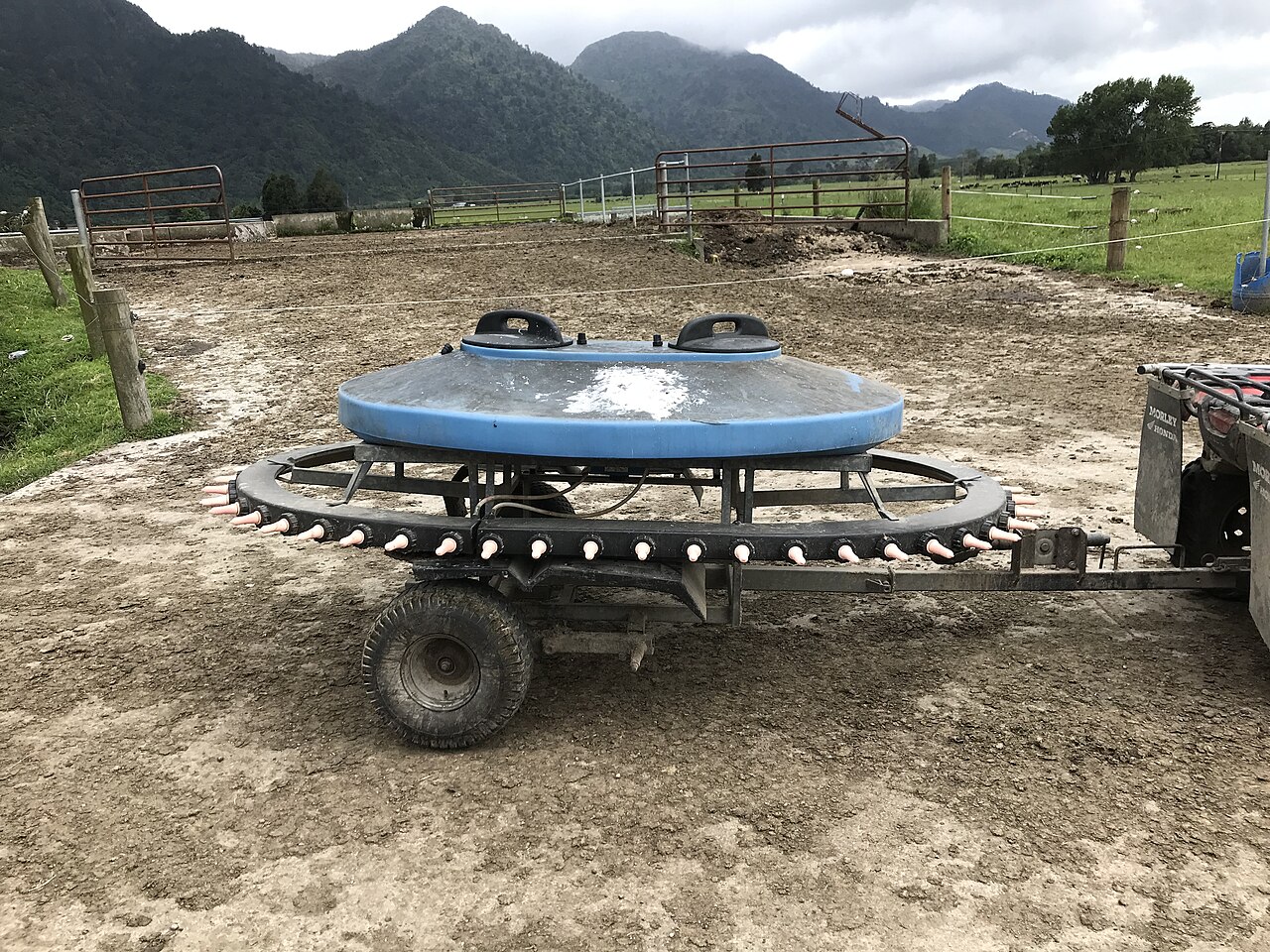
A wheeled calf feeder with a circular tank and multiple feeding nipples.

A mobile calf feeder illustrates a system with multiple feeding points and parts to inspect and clean. The photograph does not establish the feeding plan, condition or suitability of this particular equipment. Credit and license details are linked below.

Mobile calf feeder.jpg · Schwede66 · CC BY-SA 4.0 · Full credit & reuse terms

Choose equipment for the routine.

Choose for the animals using it

Check feeder dimensions against the age, size and number of animals sharing access. Look for edges, openings and mounting points that could trap or injure an animal. A larger feeder is not automatically a better fit for calves or a small group.

Make feeding equipment maintainable

For bottles and buckets, check the exact nipple, collar and mounting compatibility. Select parts you can inspect, disassemble, clean and dry according to the maker’s instructions. Replace damaged pieces and keep individual or group assignments clear. Equipment choice does not establish a feeding schedule or treatment plan.

Use estimates for their stated purpose

A weight tape estimates weight from body measurements and a particular calibration. It is not interchangeable with a calibrated livestock scale and should not be the sole basis for decisions requiring an accurate weight. Record the method so a later reader understands the number.

Keep dairy utility tools in context

A strainer or thermometer supports a defined handling task; neither establishes that milk is safe. Verify food-contact materials and suitable cleaning instructions, and follow the operation’s applicable milk-handling requirements.

Compare the whole feeding assembly

A low-cost replacement nipple is only useful if it matches the bottle or bucket, fastening and intended use. Check the complete path through which feed passes and whether each part can be removed as instructed. A large tank with many feeding points may need more storage, handling and maintenance space than a smaller operation can provide. Count the parts staff will have to inspect, not just the animals it can serve.

Leave room for cleaning and drying

Penn State’s calf-equipment training identifies access to cleaning supplies, suitable brushes and a drying rack as parts of equipment care. For a purchase decision, ask whether staff can reach every relevant surface and keep cleaned equipment from touching used equipment. Follow the current farm protocol, product labels and manufacturer instructions; this guide does not provide a substitute cleaning recipe.

Check fit as the animal changes

A coat, bucket bracket or feeder opening that initially fits may become unsuitable as calves grow or group arrangements change. Make fit checks part of ordinary observation and retain the model and size information for replacements. Avoid adjusting equipment while an animal is pressing against it. Seek experienced help when installation or handling cannot be done safely.

Keep utility tools distinct from health decisions

Use a weight estimate, a temperature measurement or an observation for the purpose it can support. Label an estimated weight with the method used. Do not turn a general equipment guide into a feeding, medication or milk-safety decision; those require the relevant farm plan and professional context.

Fictional planning example

A replacement fits the bottle but cannot be cared for easily

Fictional planning example: a replacement feeding part fits the container, but the available brush does not reach its internal surfaces. Before placing a bulk order, the keeper checks the maker’s disassembly and care instructions and whether the required brush and spare pieces are available. The comparison includes the work of maintaining the item, not merely its initial fit.

Match the equipment to the job

Questions to settle before comparing listings
Your taskWhat to compareChecks to record
A worn bottle componentThe manufacturer-compatible replacementContainer, fastening, flow specification and disassembly
Several feeding pointsA maintainable bucket or feeder arrangementSafe access, parts count, handling space and cleaning access
Approximate growth recordsA suitable measuring tapeAnimal calibration, consistent method and explicit estimate labeling

Equipment categories to compare

Each link opens an Amazon search, with multiple possible listings. Check the actual manufacturer and seller details before choosing.

Equipment category · search guide

Cattle livestock weight tape

Record an approximate cattle weight from body measurements.

Before buying: Check breed and size calibration; a tape is an estimate and does not replace an accurate scale.

Browse cattle livestock weight tape on Amazon

Equipment category · search guide

Cattle feed trough portable

Provide a defined feeding location for cattle.

Before buying: Check capacity, stability, drainage and safe access for the actual group.

Browse cattle feed trough portable on Amazon

Equipment category · search guide

Cattle mineral feeder covered

Keep a compatible mineral feeder sheltered from weather.

Before buying: Check drainage, anchoring and animal access; select mineral contents under the appropriate nutrition plan.

Browse cattle mineral feeder covered on Amazon

Equipment category · search guide

Calf feeding bottle nipple

Replace a worn nipple on a compatible calf bottle.

Before buying: Verify bottle and collar fit, material and flow specifications; inspect and clean according to instructions.

Browse calf feeding bottle nipple on Amazon

Equipment category · search guide

Calf bottle drying rack

Organize cleaned calf bottles while they dry.

Before buying: Check bottle fit, washable surfaces and spacing; a drying rack does not clean or sterilize bottles.

Browse calf bottle drying rack on Amazon

Equipment category · search guide

Calf coat insulated

Provide a correctly fitted calf coat when the care plan calls for one.

Before buying: Check size, fastening, dryness and regular fit inspections. A coat does not replace suitable housing or clinical assessment.

Browse calf coat insulated on Amazon

Equipment category · search guide

Milk filtering funnel stainless

Strain material during an appropriate milk-handling task.

Before buying: Check food-contact materials and compatible filters. Straining does not make unsafe milk safe.

Browse milk filtering funnel stainless on Amazon

Equipment category · search guide

Milk collection temperature probe

Take a spot temperature reading with a suitable probe.

Before buying: Check intended food-contact use, measuring range and calibration; temperature alone does not establish safety.

Browse milk collection temperature probe on Amazon

Before you order

  • Record animal size and access needs.
  • Match replacement parts to the existing equipment.
  • Plan disassembly, cleaning and drying space.
  • Label estimated weights with the method used.

Keep the instructions and model number with the maintenance record. Review what worked after installation before buying additional units.

Common questions

Is a multi-point feeder automatically more efficient?

Not for every operation. Consider preparation, moving, disassembly, cleaning, drying and storage as well as capacity.

Can a weight tape replace a scale?

A tape provides an estimate based on its calibration and method. Use an accurate scale where a decision requires an accurate measured weight.

Does the equipment photograph show a recommended feeding setup?

No. It illustrates the type of equipment and its components. It does not verify condition, suitability or the feeding plan for the pictured system.

Sources & further reading

Checked November 3, 2026. These sources support the stated background topics. Buying comparisons, questions and fictional examples are original editorial guidance.

  1. Penn State Extension — Calf Management Training System: Cleaning Equipment

    Equipment-care context, including brushes, access and drying. Follow manufacturer and farm instructions rather than using this buying guide as a cleaning protocol.

Source publishers and image creators do not endorse this site or the products linked here. For equipment care, use current registered product labels, manufacturer instructions and the farm’s professional guidance.