Field Tools & Supplies

Poultry equipment & flock exclusion

Inspect the enclosure, feed storage and water access before adding automation. Select hardware for the actual birds, local wildlife, weather and daily inspection routine.

Updated
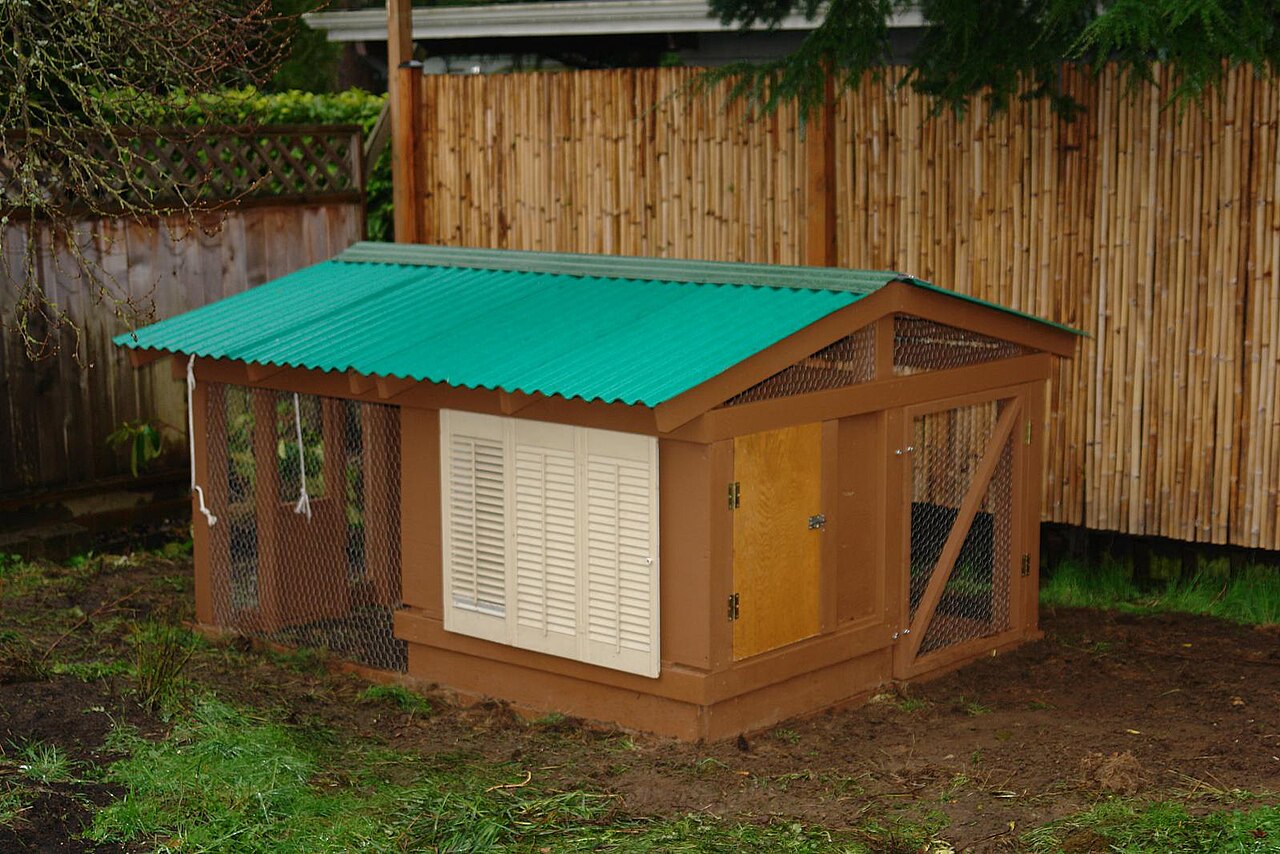
A small backyard chicken coop with a roofed, mesh-sided enclosure.

A backyard coop illustrates doors, roof edges and mesh panels that need inspection. The photograph is not a predator-resistance assessment or a recommended housing specification. Credit and license details are linked below.

Backyard chicken coop.jpg · Josh Larios from Seattle, US · CC BY-SA 2.0 · Full credit & reuse terms

Choose equipment for the routine.

Start with the enclosure openings

Measure gaps at doors, seams, vents and ground edges. Mesh opening size, wire gauge, corrosion resistance and fastening all matter. A search term such as hardware cloth does not establish that a particular listing will exclude the animals in your area. Select the material for the actual wildlife pressure and installation.

Automation needs a manual check

A timed coop door may close while birds remain outside or fail when a battery runs down. Check the opening size, manual override and pinch protection described by the manufacturer. Continue confirming birds are accounted for and the enclosure is secure.

Size water and feed access for the flock

Check drinker type, mounting height, refill capacity and whether the birds can use the system. Inspect for leaks and blocked components. A covered feeder reduces some exposure but does not replace careful storage, cleaning and inspection.

Keep a useful daily observation

Temperature and humidity readings help describe conditions at the sensor location. Keep notes about placement, weather and equipment changes rather than interpreting one reading as a health diagnosis. Follow USDA poultry guidance and contact animal-health professionals about illness concerns.

Inspect the joins as carefully as the mesh

A strong panel can still leave a gap at a door frame, roof edge or connection to another material. Measure those junctions and note what the fastener must attach to. Check door movement after installation, including whether the latch still engages when the frame shifts with use. Match the whole enclosure to the local animals and setting rather than relying on one advertised mesh dimension.

Choose controls that someone can operate manually

A door controller needs clear settings, an accessible override and instructions the next keeper can follow. Check whether resetting a clock or replacing a battery changes the schedule. Locate the controls where a person can use them safely without reaching through a crowded opening. A working motor is only one part of confirming that birds are inside and the door is secure.

Make refilling and inspection practical

Consider the person who carries the water or feed as well as the birds using it. Can the container be lifted when full, opened without spilling and inspected at its mounting height? Check that suspension points suit the load. A bigger reservoir may reduce refilling frequency while making cleaning and handling more difficult; compare both tasks before increasing capacity.

Review the enclosure when conditions change

Keep notes about a new gap, loose fixing, damaged mesh or recurring damp area. Recheck after repairs and changes to adjoining ground or vegetation. These observations help decide whether a replacement part will solve the problem or whether the structure needs attention. Continue using official poultry biosecurity guidance alongside ordinary housing maintenance.

Fictional planning example

The panel is sound, but the door corner has a gap

Fictional planning example: a keeper plans to replace an entire run panel after noticing wildlife nearby. Inspection finds that the panel itself is intact, while the door no longer sits squarely in its frame. The keeper measures the gap and checks the frame, hinges and latch before ordering materials. Buying more mesh without correcting the joint would leave that opening unresolved.

Match the equipment to the job

Questions to settle before comparing listings
Your taskWhat to compareChecks to record
A damaged enclosure openingSuitable mesh with compatible fixingsActual opening, gauge, joins and local exclusion needs
A door needing reliable closureA suitable latch or compatible controllerFrame condition, manual operation and a daily check
An inconvenient refill taskA maintainable feeder or drinkerFlock access, suspension, full weight and cleaning reach

Equipment categories to compare

Each link opens an Amazon search, with multiple possible listings. Check the actual manufacturer and seller details before choosing.

Equipment category · search guide

Chicken coop automatic door

Automate a compatible coop doorway on a chosen schedule.

Before buying: Check opening dimensions, manual override, power backup and pinch protection. Confirm birds are inside yourself.

Browse chicken coop automatic door on Amazon

Equipment category · search guide

Poultry waterer nipple bucket

Provide water through a compatible nipple bucket system.

Before buying: Check flock suitability, mounting height, flow and leak resistance; inspect daily.

Browse poultry waterer nipple bucket on Amazon

Equipment category · search guide

Chicken run welded hardware cloth

Cover suitable enclosure openings with welded mesh.

Before buying: Verify actual opening size, wire gauge, corrosion rating and fastening. Match mesh to the animals and environment.

Browse chicken run welded hardware cloth on Amazon

Equipment category · search guide

Poultry door security latch

Secure a coop access door during routine use.

Before buying: Check door alignment, mounting strength and local predator dexterity. Inspect the whole frame, not only the latch.

Browse poultry door security latch on Amazon

Equipment category · search guide

Chicken coop temperature monitor

Observe temperature near a defined coop location.

Before buying: Check range through coop walls and placement away from direct sun or heat sources.

Browse chicken coop temperature monitor on Amazon

Equipment category · search guide

Chicken coop humidity monitor

Observe relative humidity inside the coop.

Before buying: Check rated accuracy, operating range and placement; humidity alone does not explain bird health.

Browse chicken coop humidity monitor on Amazon

Equipment category · search guide

Poultry feeder hanging

Keep feed in a defined hanging feeder.

Before buying: Check capacity, stable suspension and safe access. A feeder is not a substitute for protected feed storage.

Browse poultry feeder hanging on Amazon

Equipment category · search guide

Rodent resistant feed bin

Reduce easy pest access to stored feed.

Before buying: Check lid closure, seams and damage regularly. No container replaces pest monitoring or good storage.

Browse rodent resistant feed bin on Amazon

Before you order

  • Measure gaps and identify local exclusion needs.
  • Check fasteners and latch operation by hand.
  • Confirm every bird has suitable water access.
  • Keep a daily enclosure and equipment log.

Keep the instructions and model number with the maintenance record. Review what worked after installation before buying additional units.

Common questions

Is chicken wire the same as hardware cloth?

No. These names can describe different constructions. Compare the actual material, opening, wire gauge, joins and intended use in the listing and manufacturer information.

Will an automatic door account for every bird?

No. Verify birds are inside and confirm closure yourself. Timers, light settings and power failures can change operation.

Does a coop photograph establish predator protection?

No. A photograph cannot establish the strength of every joint, fastening or buried edge. Inspect the actual enclosure for the setting and wildlife involved.

Sources & further reading

Checked November 3, 2026. These sources support the stated background topics. Buying comparisons, questions and fictional examples are original editorial guidance.

  1. USDA APHIS — Biosecurity Basics

    General poultry access, wildlife protection and clean-routine principles; no endorsement of the equipment linked here.

  2. University of Minnesota Extension — Small-scale poultry

    Further husbandry reading on housing, feeders and flock care; equipment selection still depends on the actual installation.

Source publishers and image creators do not endorse this site or the products linked here. For equipment care, use current registered product labels, manufacturer instructions and the farm’s professional guidance.